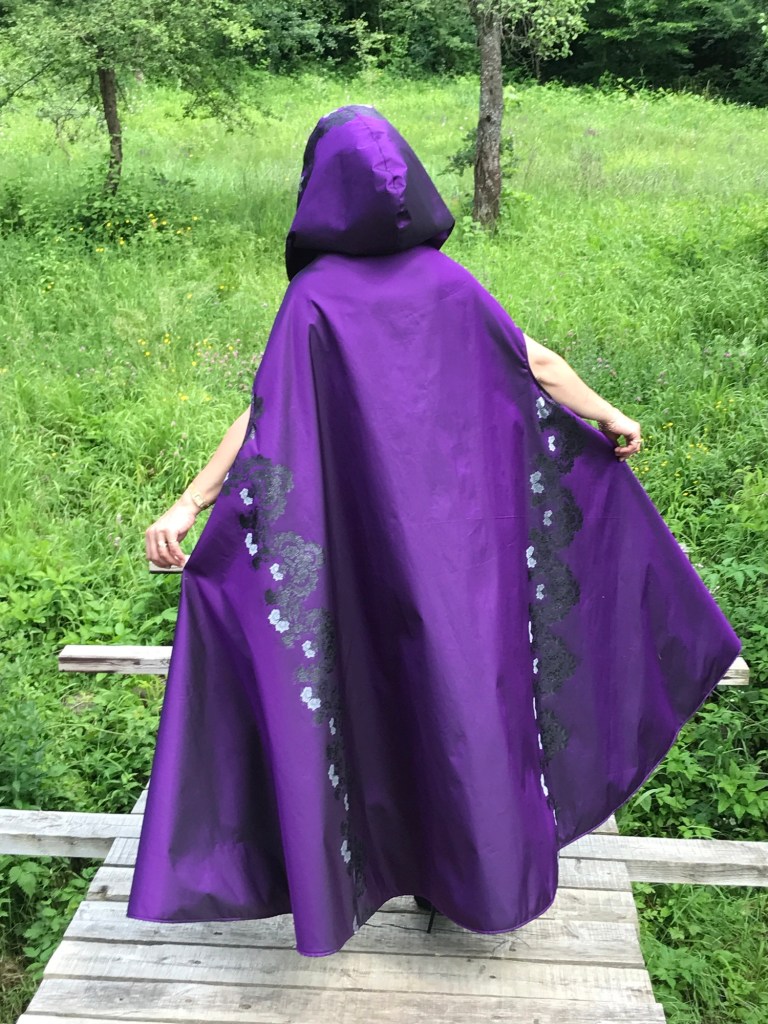
There once was a man who had traveled far from the center of himself. He wandered through the ruins of his own choices, soul-sick and threadbare, until the wind itself seemed to whisper of a place beyond remorse. It led him, finally, to a high plateau where the air rang with silence and the earth bore the scent of iron and ash.
There, carved into the mountainside like a scar or a prayer, stood a sanctuary wrapped in black stone and banners of fire. It had no name, only a sigil: a radiant eye beneath a blade.
Its guardian was a priest called Solanna—a woman of fierce bearing, draped in vestments that moved like armor. Her presence felt older than her face. She spoke with the cadence of someone who had long since stopped doubting herself.
To those who came seeking penance, she offered not comfort but refinement. She spoke of the soul as a field of battle, of darkness that must be driven from the inner sanctum. Her voice carried the weight of sacred campaigns—never named, but always implied. Her rituals were sharp, her gaze relentless. Her every gesture declared: I was forged for this.
But she had not always been so.
Long ago, before she heard the call, Solanna worked in the quiet craft of mending. She shaped thread and cloth into garments for others—beautiful, necessary things. But she grew weary of repairing what others had torn. The thread began to feel too delicate. The fabric of people’s lives, too soft. One day, as she bent over a garment ripped at the heart, something in her broke. She stood up, walked away from the loom, and burned her own patterns to ash.
That night, she said, a voice found her in the wind. Not a god, exactly—but something with fire on its tongue. It told her she had been chosen not to mend, but to purify. To exchange the needle for the blade. To become the instrument, not the servant.
And so she began again.
She stitched a new identity from fervor and ash, learning to speak with the voice of the righteous. She read old texts like battle maps. She fasted, knelt, bled, rose. She built the sanctuary stone by stone, shaping it into an altar and a fortress both.
When the man arrived—silent, sorrowing—she saw the war in him. She welcomed him with a touch that burned more than it soothed.
“There are ruins within you that were never truly conquered,” she told him. “I can help you reclaim them.”
He wanted to believe her.
He had known other women with holy eyes and wounded hands. He had offered his shame before, had laid it like a body at someone’s feet, and called it love. This time, he hoped it might become salvation.
He gave her everything: his story, his guilt, his hunger to be changed.
But redemption, here, had the taste of iron.
Her rites demanded repetition. Her mercy required obedience. She spoke of inner strongholds and ancestral pacts, of cleansing fires and broken lineages. Her voice filled the temple like smoke—unquestioned, unrelenting.
And in the echo of her command, he began to remember.
He had been here before—not in place, but in pattern. He had loved a woman once who wrapped herself in certainty, who believed the holy lived in her shadow. She too had once made beautiful things, before the hunger to save had devoured the impulse to create.
One night, he dreamed of a long hallway filled with cloaks—each one woven by a woman who had turned away from softness. Solanna stood at the end, wearing a robe stitched not with thread but with ash. When he reached for her, the robe unraveled, and beneath it, she was only smoke and hunger.
He woke before dawn.
At first light, he walked to the river that marked the edge of the sanctuary. There, he whispered to the sky, to his own reflection, to the child in him that still believed:
“You are not cloth to be cut. You are not land to be won. You are not a soul to be saved like a trophy.”
The wind rose.
And back in her chamber, Solanna sat before her mirror and stared at the hands that once held a needle.
For a moment, she could not remember why she had stopped mending.

 Labyrinths
Any comment or thoughts share them below.