There are moments in therapeutic work when myth does not feel distant or symbolic—but exact. A client’s story emerges not in a single line, but in fragments: an image, a dream, a tension in the body. Beneath these fragments lies not only trauma, but something more elusive—a disturbance in psychic balance.
In these moments, two symbolic frameworks continue to hold shape for me: Theodore Reik’s work on the “unknown murderer” chapter, and the ancient Egyptian ritual of the Weighing of the Heart. Though separated by thousands of years and cultures, both revolve around the soul’s need for equilibrium—the unbearable weight of unacknowledged transgression, and the mysterious inner force that seeks to restore order.
In The Compulsion to Confess, Reik draws on a series of anonymized cases—stories of people who have committed or arranged acts of violence without being discovered. These individuals remain untouched by the justice system, but not by their own minds.
Reik’s insight is not rooted in criminology, but in the structure of guilt. The unconscious does not forget what the ego hides. It speaks through dream, through compulsion, through symbolic enactment. These “unknown murderers” do not confess because someone forces them—they confess, often indirectly, because their psyches can no longer carry the internal split between what has been done and what remains unacknowledged.
The soul, Reik shows us, has its own scale. And it seeks balance.
In modern clinical practice, stories arise that carry a similar shape—where justice is not administered by the courts, but pursued internally by the injured psyche.
One such vignette, drawn from composite clinical experience, concerns a woman who survived a catastrophic betrayal. Her partner, in a violent and unfathomable act, ended the life of their unborn child by cutting open her womb. The legal system failed to deliver protection, let alone resolution.
In time—and through dreams, indirect speech, and finally, revelation—she disclosed that she had taken justice into her own hands. She hired someone to kill the man who harmed her. The act was deliberate, and once complete, it brought her not guilt, but an uncanny sense of calm.
This story, like Reik’s case material, raises more questions than it answers. What happens in the psyche when vengeance restores a sense of order? Is this true equilibrium, or a psychic stasis yet to unravel? If the inner scale feels balanced, must we assume a deeper reckoning is still to come?
Or—more unsettling still—could the psyche accept this form of justice as sufficient?
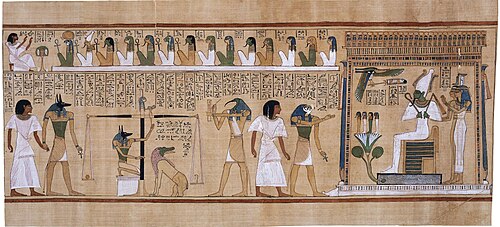
In the Egyptian Book of the Dead, the ritual of judgment is known as the Weighing of the Heart. In the Hall of Two Truths, the heart of the deceased is placed on a scale opposite the feather of Maat, goddess of truth, order, and divine equilibrium. A heart that outweighs the feather is devoured; a heart that balances may enter the afterlife.
This ancient image offers a profound psychological metaphor: the soul is not weighed by external law, but by internal harmony. Not whether something has happened—but whether the self can hold it without being split apart.
In clinical work, we often find ourselves in the symbolic presence of this ritual. We are not the ones weighing. We are not Maat. But we hold the scale steady, so the psyche can begin to tell whether its own heart has grown too heavy—or perhaps too still.
Our work is not to deliver judgment. It is to create a space where psychic weight can be felt and named. We listen not only for guilt, but for contradiction. For repetition. For the signs of something unresolved echoing beneath the surface of peace.
The psyche’s pursuit of equilibrium may be circuitous, fierce, or bewilderingly quiet. Justice, in these cases, is not found in confession or forgiveness—but in the soul’s gradual reckoning with itself.
When legal systems fail, the psyche may take over. And what it seeks is not revenge for its own sake—but the restoration of something sacred that was undone.
Whether through Reik’s anonymous case histories or modern-day clinical vignettes, a pattern emerges: the soul suffers from what it cannot bear, and it speaks in order to restore balance. What appears from the outside as detachment or peace may, in fact, be a moment of real psychic equilibrium—or a pause before the next stirring of truth.
We do not need to decide. We only need to witness. The heart will weigh itself, in time.
 Labyrinths
Any comment or thoughts share them below.